



Exploring the Intersection of Culture, Community, and Nature through Thoughtful Urban Planning
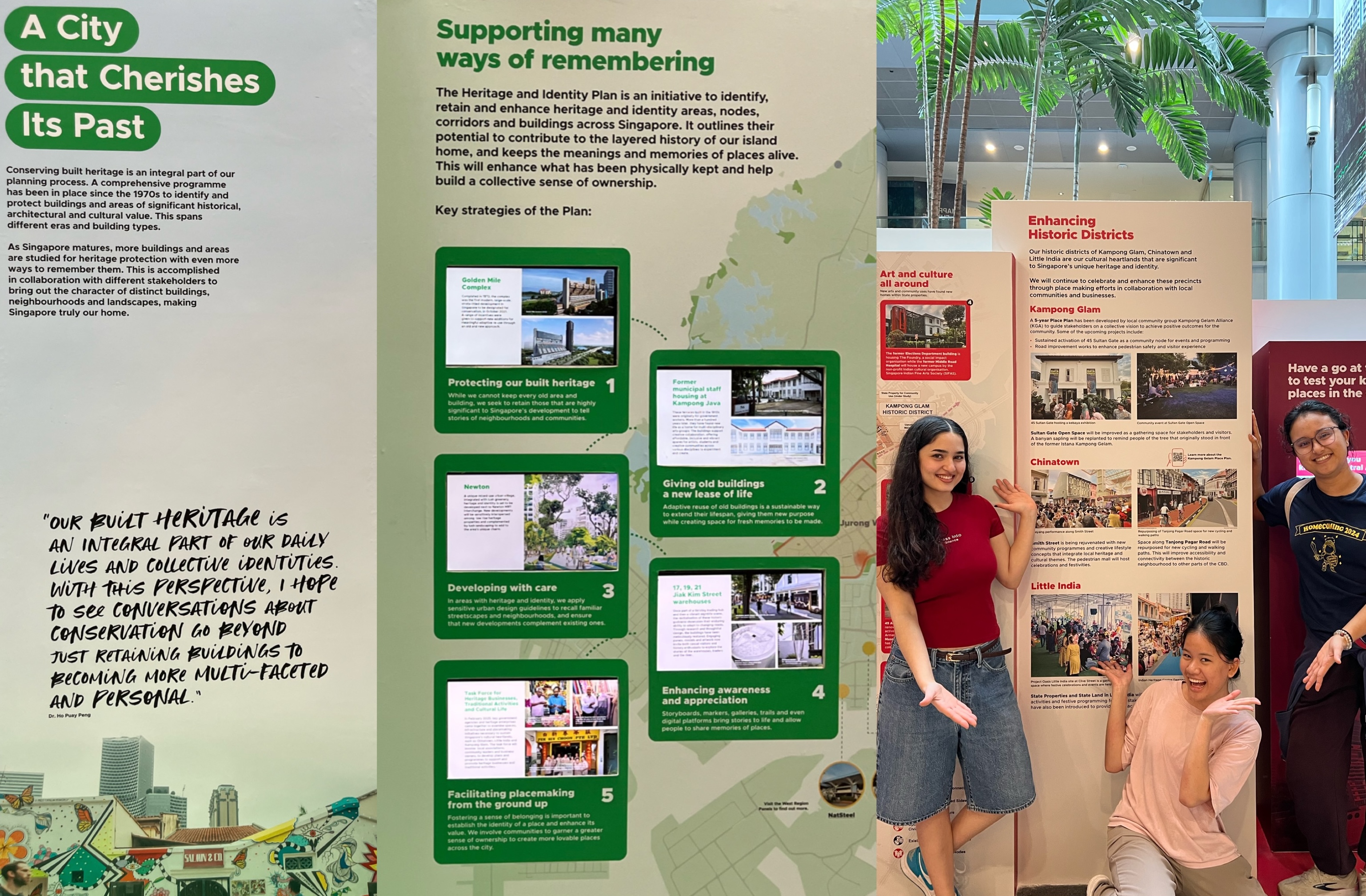
On November 28, 2025—my birthday!— we visited the Singapore City Gallery to understand how Singapore became a city that cherishes both its past and its future. What surprised me most was how intentional Singapore has been for decades: conserving built heritage, weaving cultural identity into urban design, and ensuring nature remains a living part of the city rather than something pushed aside.
The visit revealed a city shaped by care, memory, and community collaboration—a place where old shophouses, sacred sites, and green skyscrapers coexist with remarkable harmony.
Singapore’s Commitment to Heritage
Singapore’s approach to heritage isn’t nostalgic—it's active and evolving. Since the 1970s, the government has worked to identify and protect buildings and neighborhoods with historical, architectural, and cultural significance. These efforts span different eras, architectural styles, and community landmarks.
As the city matures, more places are studied for conservation, and more creative ways of remembrance emerge—storyboards, markers, oral histories, trails, and community-led initiatives. The aim is simple yet profound:
To keep memories alive while allowing the city to grow.
This is the heart of the Heritage and Identity Plan, which focuses on:
- Protecting built heritage
- Giving old buildings new life
- Developing with care so new structures complement the old
- Enhancing public appreciation through accessible storytelling
- Supporting placemaking from the ground up
Walking through the City Gallery, it becomes clear:
heritage is not just something Singapore preserves—it's something Singapore practices.
A City Where Culture Lives on the Streets
When you walk through Singapore, it feels like flipping through the pages of a living storybook written by many cultures.
In Chinatown, red lanterns sway above lively market stalls.
In Little India, the air fills with the scent of spices and temple bells.
In Kampong Glam, the golden dome of the Sultan Mosque rises over streets colored by murals, textiles, and music.
These are not tourist attractions—they are living communities where culture shapes the rhythm of everyday life. Traditions are woven into architecture, public spaces, and even city planning policies.
This multicultural landscape is why our group felt such a deep connection here.
Our Project: Learning from Singapore’s Cultural & Green Urbanism
Our project explores how Singapore weaves together culture, community, and nature through thoughtful urban planning. As three people with Nepali, Thai, and Malaysian Chinese ancestry, we see reflections of our own cultures and homes in Singapore’s journey. Over 17 days, we will visit Chinatown, Little India, and Kampong Glam, as well as smaller neighborhoods that embody culturally sensitive planning. Through conversations and observations, we hope to learn how ethnic diversity and green innovation shape a city that balances heart and sustainability—lessons we can bring back to our own countries. We want to understand how inclusive urban planning can honor cultural diversity while promoting sustainability. By engaging with local communities, experts, and urban spaces, we hope to learn how design can bring people and nature into harmony—insights we can adapt to Nepal, Thailand, Malaysia, and other developing Asian countries.
Three Voices, Three Homes, One Shared Curiosity
- Kritika
When you walk through Singapore, you can feel how every culture has space to breathe.
Little India reminded me of Kathmandu’s bustling alleys—colorful, loud, full of life.
Even far from home, I recognized the same warmth in its markets, temples, and everyday interactions.
Singapore shows how cultural quarters can thrive within modern development rather than being erased by it.
- Rachel
Singapore is a place where the past and future walk hand in hand.
Skyscrapers shine above heritage shophouses, and eco-friendly buildings stand beside century-old temples.
As a Malaysian Chinese woman, Chinatown felt both familiar and yet elevated by thoughtful design.
Singapore’s balance of heritage and innovation offers lessons for Malaysia, where multicultural identity is rich but not always reflected in planning.
- Palmy
I grew up in suburban Thailand, where malls and highways often replaced green spaces and local markets.
In Singapore, I saw what I’ve always wished for: a city where nature grows alongside people.
Trees line the streets, rooftops bloom, and public transport connects culture, parks, and neighborhoods seamlessly.
With Thailand facing pollution crises and disjointed development, Singapore’s model feels like an inspiring blueprint for the future.
Where Culture Meets Nature: Our Journey Through Singapore
Our exploration will take us through:
- Chinatown
- Little India
- Kampong Glam
- Singapore Botanic Gardens
- Cloud Forest & Gardens by the Bay
- Parkroyal on Pickering
- Oasia Hotel Downtown
- Green corridors and community parks
- Heritage trails and conservation areas
At each stop, we’ll ask:
- How do cultural identity and urban design shape each other?
- How can development happen without displacing communities?
- What does it take to create cities that are both livable and sustainable?
We aren’t just searching for answers—
we’re searching for ideas we can bring home.
Reflections from the Singapore City Gallery
The Gallery helped us understand the "why" behind what we saw on the streets.
Singapore’s success comes from:
- Long-term planning
- Cross-community collaboration
- Respect for diverse identities
- Integrating nature into infrastructure
- Protecting heritage while building the future
It’s a reminder that cities don’t become harmonious by chance—they become harmonious by choice.
Conclusion
Singapore is more than a global city.
It is a home—one built with memory, culture, and greenery at its foundation.
For us, this project is a final shared journey, a way to understand what makes Singapore so special and what lessons we can bring back.
My Singapore, my home.
A beautiful last trip to learn—and to dream.